
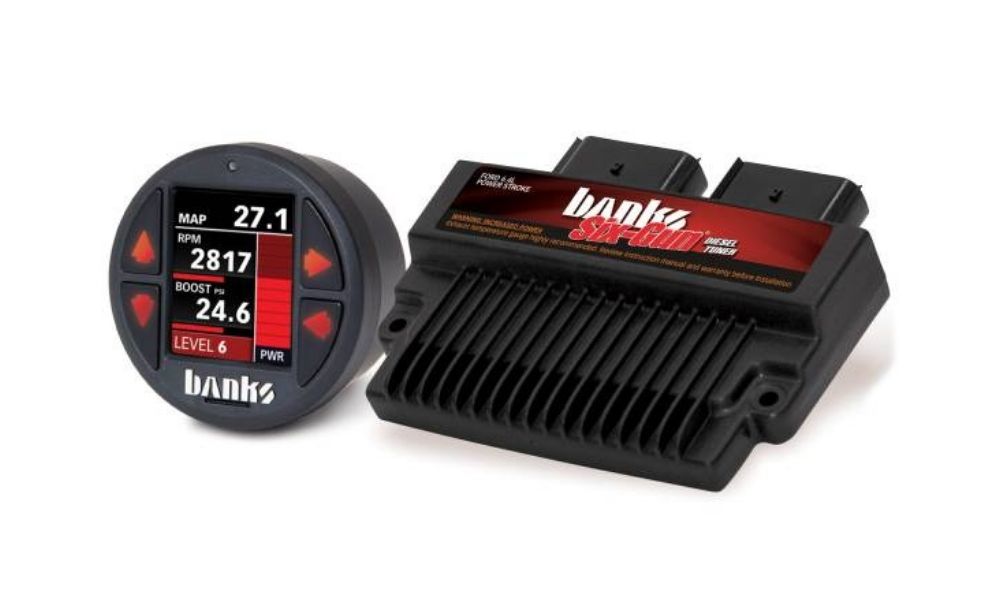
As trucks have gotten more and more sophisticated, the need for diesel programmers and tuners has grown. These devices allow truck owners to modify various engine parameters to improve their vehicle’s performance and fuel economy. This article will give you a quick overview of diesel programmers and tuners, including what they are, how they work, and the difference between a programmer and a tuner.
First up is "tuning." Tuning involves adjusting various parameters to get your vehicle's engine running optimally. The most common ones include changing the turbo boost pressure, changing fuel injection timing, and adjusting the fuel-to-air ratio.
Tuners work by communicating with your engine's ECU (Electronic Control Unit) via the OBD-II port. Usually, this is where mechanics go to check diagnostic codes, but tuners use it for communicating. The tuner takes the information it gets from your ECU and changes the parameters to what you've requested.
Truck owners use diesel programmers and tuners to modify these engine parameters. These devices can control a wide range of processes, from how much torque your truck makes to how much throttle you need to give before it starts accelerating. Some of the more advanced models even have the ability to control how quickly your turbo spools up.
The main difference between diesel programmers and tuners is that a programmer will change settings without your manual input, while a tuner will require you to give it specific commands. The Ford Powerstroke Diesel Tuner is a perfect example of how the two work.
This device allows you to adjust things like torque and fuel economy parameters on 2011-2014 Ford 6.7L Powerstroke diesel engines. It comes preloaded with factory settings, but owners can download custom files to their computer and upload them through the USB port. When you install a tuner on your truck for the first time, it will automatically go into tuning mode.
That was just a quick overview of diesel programmers and tuners, but there’s more to learn if you want to perfect your truck’s performance. For all your diesel truck performance needs, Norcal Diesel Performance features a variety of Ford diesel programmers and a wide range of diesel tuners. We have a team of professionals with years of experience in everything from performance upgrades, installation, and repairs.
A. A diesel programmer typically uses preloaded settings to adjust engine performance, while a diesel tuner allows for more customized control of parameters such as fuel delivery, turbo boost, and throttle response. Tuners generally provide greater flexibility for drivers looking to fine-tune their truck's performance.
A. Most diesel tuners connect through the vehicle's OBD-II port and communicate directly with the Engine Control Unit (ECU). The tuner reads engine data and modifies specific settings based on the performance goals selected by the vehicle owner.
A. Yes. Many diesel programmers include economy-focused tuning options that optimize fuel injection timing and air-to-fuel ratios. When combined with responsible driving habits, these adjustments can help improve overall fuel efficiency.
A. Depending on the vehicle and tune, a diesel tuner can increase horsepower, boost torque, improve throttle response, enhance towing performance, and optimize turbocharger behavior. The exact results vary by truck model and tuning configuration.
A. Most modern diesel tuners are designed for straightforward installation and can be connected through the OBD-II port without extensive mechanical modifications. Many devices feature step-by-step instructions, making installation manageable for most truck owners.
You must login to post comments.